Your Relationship with the Sun
With the summer solstice here and the longest days of the year ahead, it feels like the right time to talk about the sun.
Sun exposure is one of those topics that tends to get oversimplified, into either fear or carelessness. But the relationship between the sun and the skin is layered, and worth understanding.
Our skin evolved in sunlight. The sun is not something to protect yourself from at all costs. It is something to work with intelligently.
UVA, UVB, and Why the Time of Day Matters
UVB is the shorter wavelength, higher energy, associated with sunburn in excess, and also responsible for vitamin D synthesis. It's strongest when the sun is high in the sky and mostly blocked by glass. Sitting near a sunny window is not the same as being outside.
UVA penetrates more deeply, reaching the dermis where collagen and elastin live. It's more connected to photoaging and pigmentation changes, and it's present year-round, on cloudy days, through windows, throughout the entire day. A walk at 7 a.m. and a walk at 1 p.m. are not the same experience for the skin.
Morning Light and Circadian Rhythm
The sun is more than UV. In the early morning and evening, when it's lower on the horizon, it offers more red and near-infrared light — the same wavelengths used in red light therapy panels. These are associated with mitochondrial function, circulation, collagen support, and inflammation response.
Morning light also sets your circadian rhythm. When natural light reaches the eyes early in the day, it sends a signal to the brain that anchors energy, mood, cortisol, and melatonin production. The skin is not separate from any of this.
Easing Into the Season
After months spent mostly indoors, the skin hasn't had time to adapt to stronger light. Melanin production, antioxidant response, and barrier resilience all need a signal to build and that signal is gradual exposure, not one long afternoon in June.
Short windows of morning or early evening light, with the skin exposed but not pushed to the point of redness, help the body begin preparing for the season.
Zinc and Mineral Protection
When it comes to sun support, zinc oxide is one of my favourite ingredients. It sits on the surface of the skin, creating a physical layer that reflects and scatters UV radiation before it penetrates. It's naturally broad spectrum, photostable, and also genuinely calming and anti-inflammatory, which makes it ideal for sensitive, reactive, or barrier-compromised skin.
This is worth contrasting with titanium dioxide, another common mineral sunscreen ingredient. Unlike zinc, titanium dioxide can act as a free radical generator when exposed to UV light potentially contributing to oxidative stress in the skin rather than protecting against it. It's a meaningful distinction, especially for anyone paying attention to the full picture of what they're putting on their skin.
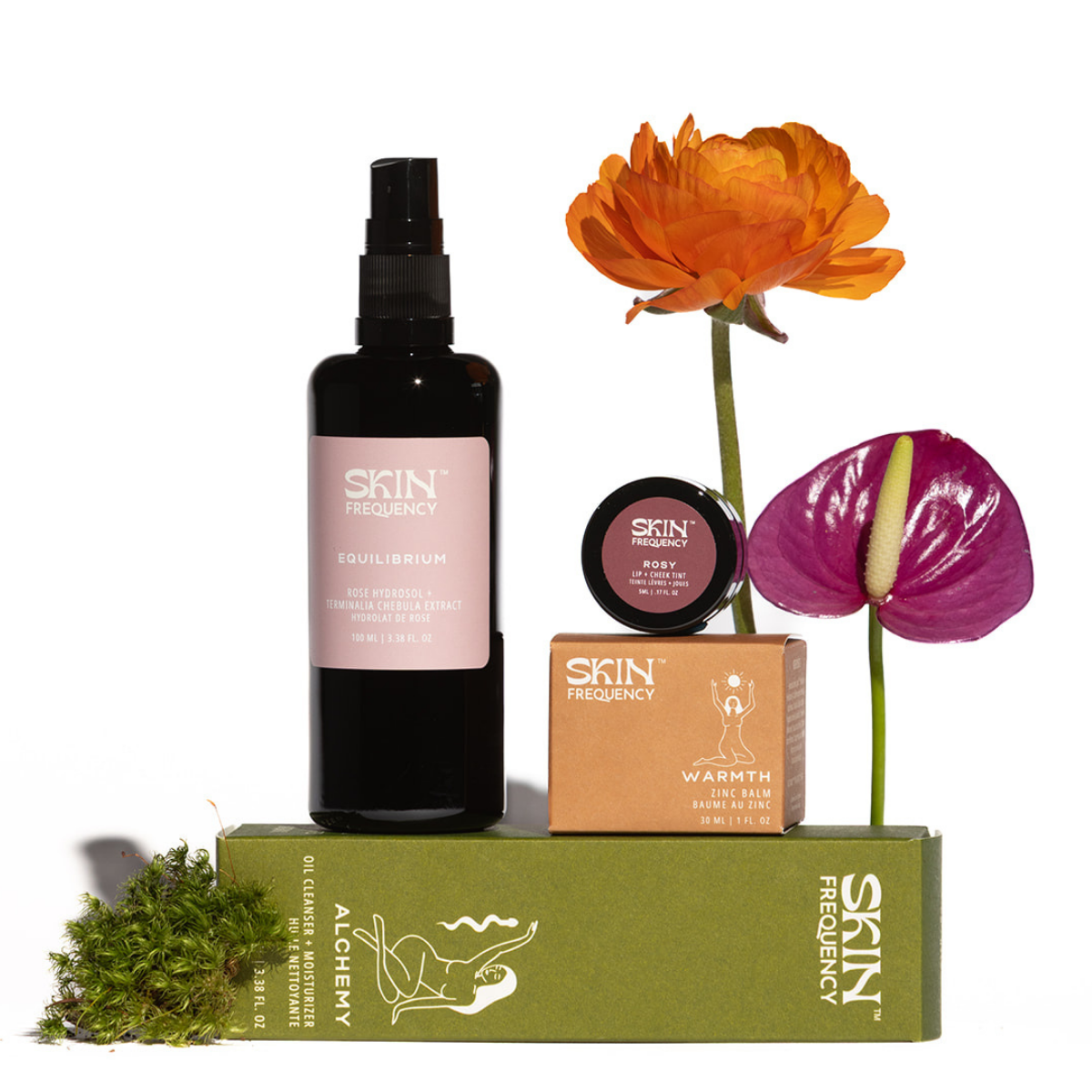
Our Warmth zinc balm is formulated with 17% non-nano, uncoated zinc oxide, tinted with cocoa to soften the white cast, and includes red raspberry seed and carrot seed oils for antioxidant-rich barrier support. It is not a certified SPF product, in Canada and the US, that's a regulated drug claim but it's what I personally use every day.
Supporting the Skin Through Summer
Summer skincare doesn't need to become more complicated. Fewer products, better ingredients, and a routine that respects the skin's natural function is usually enough: a gentle cleanse, an antioxidant mist, a nourishing oil or serum, and mineral zinc protection before you head outside.
Diet also plays a role. Deeply pigmented seasonal produce, berries, tomatoes, watermelon, leafy greens brings antioxidant and hydration support during the months when the skin is exposed to more light.
The goal is to work with the sun more intelligently, not to fear it.
For a deeper conversation on UVA and UVB, circadian rhythm, seasonal skin support, and how to care for your skin through summer, listen to the newest episode of Skin Freqs, available wherever you get your podcasts.