New Gen Vitamin C
Vitamin C is everywhere in skincare. But not all vitamin C works the same way — and understanding the difference can change what you look for in a product.
Most vitamin C serums use a form called L-ascorbic acid. It's well researched and effective, but it comes with some real drawbacks. It's water-based, which means it doesn't penetrate the skin easily. It's unstable, it breaks down when exposed to light and air, which is why so many vitamin C serums turn orange over time. And it requires a very acidic formula to work, which is often what causes that stinging and redness people experience. If you've ever opened a vitamin C serum to find it's already changed colour, or used one that irritated your skin — this is why.
There is a newer, more stable form called oil-soluble vitamin C. The specific type we use is called Tetrahexyldecyl Ascorbate, THD ascorbate for short. It sounds complicated but the difference is actually straightforward.
Because it's oil-based rather than water-based, it absorbs into the skin more easily and gets deeper where it can actually do its job. Your skin's outer layer is made up mostly of lipids, fats, so an oil-soluble ingredient moves through it naturally rather than sitting on top of it. It's also far more stable, so it stays active in the formula and on your skin without breaking down.
The results are the same as traditional vitamin C, brighter skin, more even tone, collagen support, antioxidant protection, but without the irritation, the instability, or the restrictions on when and how you can use it.
Here's something worth knowing about percentages too. With oil-soluble vitamin C, you don't need a high percentage to see results. Because it penetrates more effectively and stays stable, a well-formulated 5% is doing more real work than a 20% water-based serum that's already started to break down before it even reaches the deeper layers of the skin.
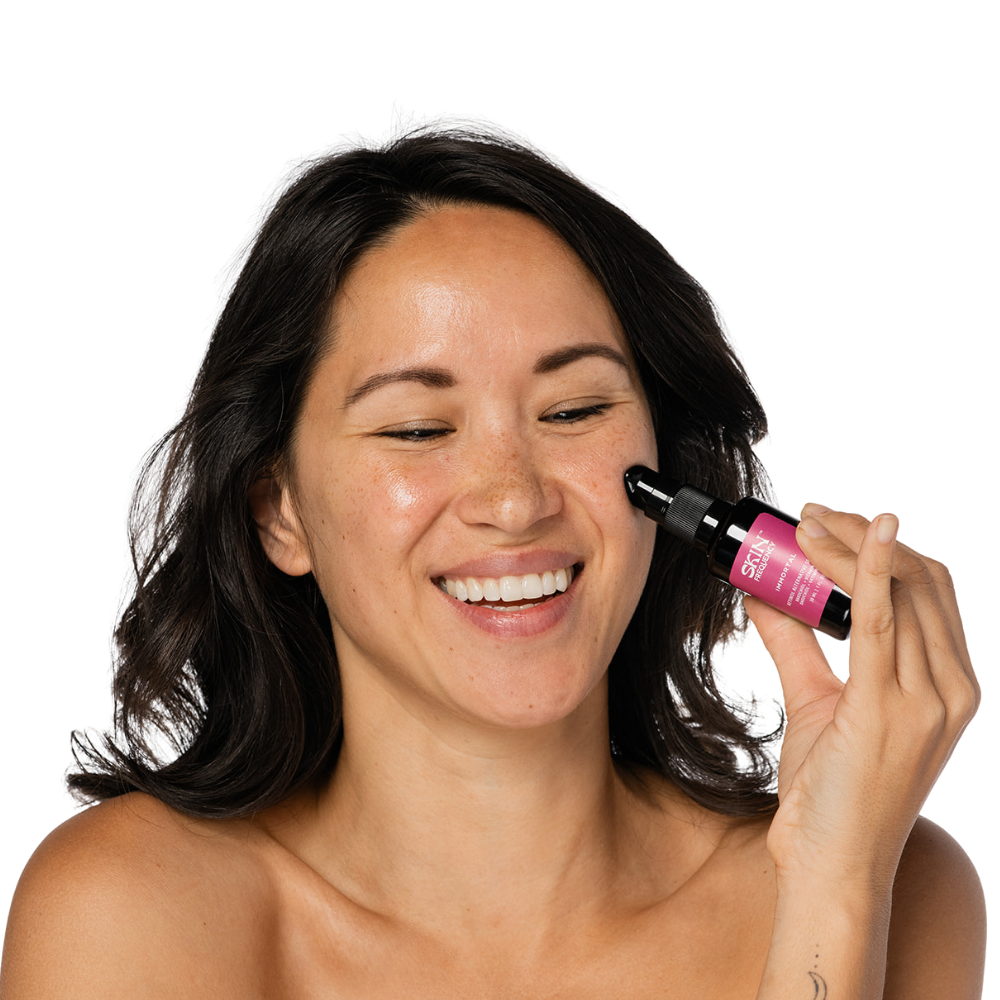
We use THD ascorbate at 5% in our Immortal serum, alongside 1% bakuchiol. These two ingredients don't just work well together, they actually make each other more effective. Oil-soluble vitamin C takes time to convert to its active form once it's in the skin. During that time, bakuchiol's antioxidant properties protect the formula and keep it stable. They were made to work together and that's exactly how we formulated them.
Two actives, one step, no juggling your routine.
We talk about how these two ingredients work together and why traditional vitamin C and retinol can't be paired the same way in the latest episode of Skin Freqs.