Bakuchiol - The Retinol Alternative
Bakuchiol is a plant compound from the seeds and leaves of the babchi plant. It has centuries of use in Ayurvedic and Traditional Chinese Medicine, valued for its skin-healing and anti-inflammatory properties long before the skincare industry got hold of it.
What makes it scientifically interesting is this. If you compared a bakuchiol molecule to a retinol molecule they look nothing alike, completely different structures, no chemical resemblance. And yet when researchers mapped which genes get switched on when bakuchiol is applied to skin cells, it was activating the same genes as retinol. The same collagen-producing pathways, the same cell turnover signals, the same renewal processes. Two structurally unrelated molecules arriving at the same biological destination by entirely different roads.
The clinical research supports it. A randomised double-blind trial published in the British Journal of Dermatology compared 0.5% bakuchiol to 0.5% retinol over twelve weeks. Both delivered comparable reductions in wrinkles and hyperpigmentation. Retinol users reported significantly more scaling and stinging. On the hyperpigmentation measure specifically, bakuchiol actually outperformed retinol - 59% improvement versus 44%.
Now the part that matters when you're shopping. Not all bakuchiol products are using the same thing.
The bakuchiol in the clinical studies is a pure isolated extract with a controlled, consistent concentration. Babchi oil — sometimes listed on labels instead - is the whole oil pressed from the same plant. It does contain bakuchiol, but alongside many other compounds, at a concentration that varies from batch to batch and is significantly lower than a pure extract. It is a different ingredient and cannot make the same claims.
The well-researched range for pure bakuchiol extract is 0.5% to 1%. When you see a product advertising 5%, 7%, 10% - it is most likely the whole oil, not a pure extract. More is not more with this ingredient.
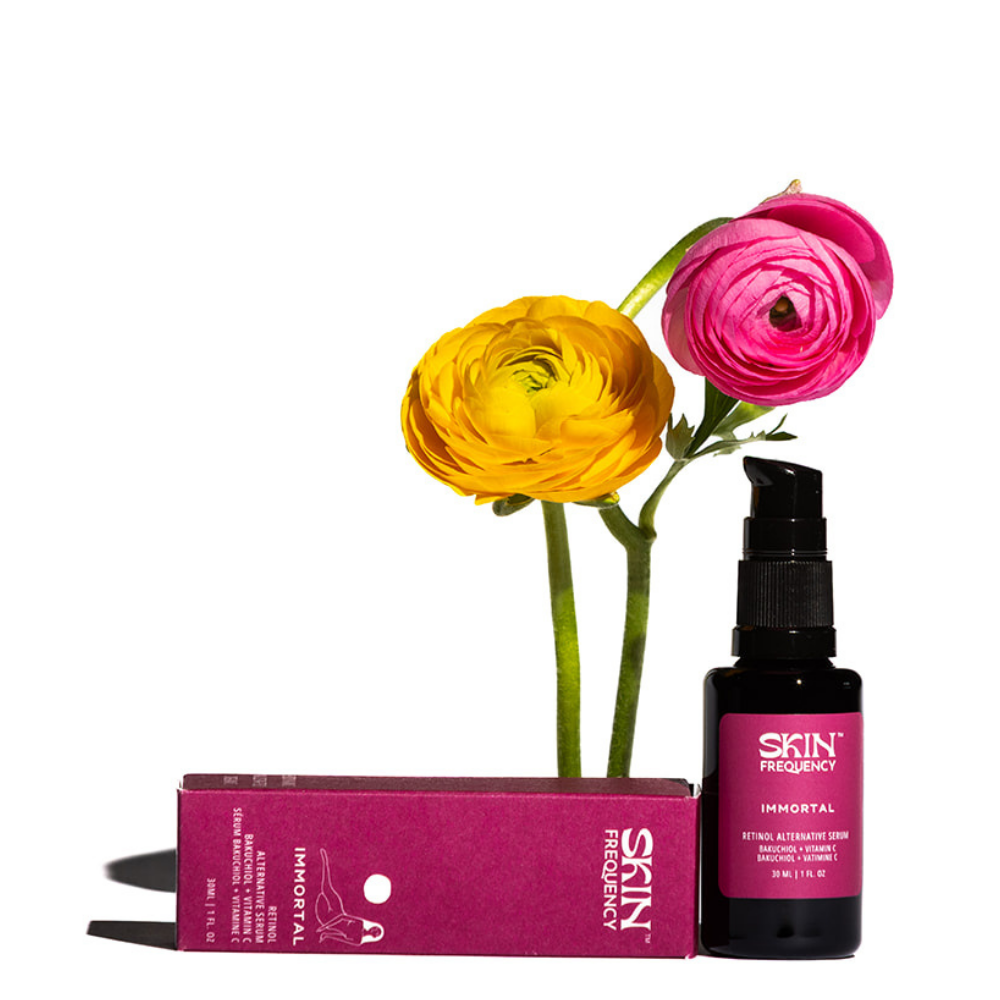
When reading a label, look for the word bakuchiol specifically - not babchi oil - and a percentage between 0.5% and 1%.
We go through all of this in detail in the latest episode of Skin Freqs, including what the research shows on sensitive skin and how bakuchiol behaves differently to retinol with sun exposure.