
Buccal Massage
Working With the Deeper Muscles of the Face
Facial tension can build up in the jaw, cheeks, around the mouth and through the muscles we use every day to chew, speak, clench and express.
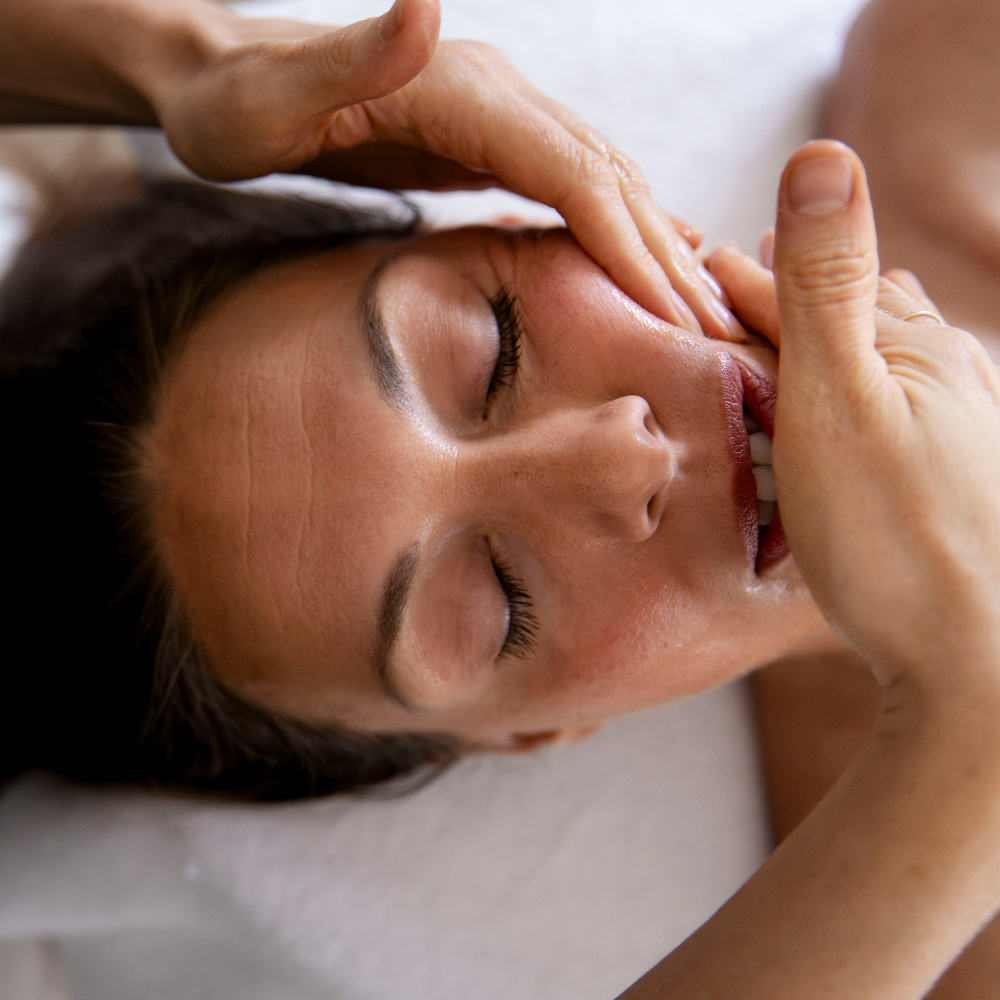
Buccal massage is an intraoral massage technique that allows us to work with these deeper facial muscles from both inside and outside the mouth.
At Skin Frequency Studio, buccal massage is used as part of a broader approach to facial tension, circulation, lymphatic movement and sculptural facial massage.
What Is Buccal Massage?
Buccal massage is performed by working gently inside the mouth while also supporting the tissues externally.
This gives access to muscles that are difficult to reach through traditional facial massage alone, particularly through the jaw, cheeks and around the mouth.
It can be especially helpful for people who notice:
-
Jaw clenching or facial tension
-
Tightness through the cheeks or around the mouth
-
A feeling of heaviness through the lower face
-
Puffiness or stagnant-looking skin
-
Facial holding patterns related to stress
-
Tension associated with grinding or overuse of the jaw muscles
The work can be gentle or more focused depending on where tension is being held.
Why Work Inside the Mouth?
Many of the muscles involved in jaw movement and facial expression can be approached more directly from inside the mouth.
This allows us to work with areas of tension from both sides of the tissue rather than only from the surface.
For some clients, this creates a noticeable sense of release through the jaw and cheeks and can help the face feel less tight or compressed.
The Benefits of Buccal Massage
Buccal massage may help:
-
Release tension through the jaw and cheek muscles
-
Improve comfort and mobility through areas that feel tight or overworked
-
Support facial circulation
-
Encourage lymphatic movement and reduce the appearance of puffiness
-
Soften areas of facial holding
-
Create more definition through the cheeks and jawline
-
Support a more relaxed, open appearance through the lower face
The sculpting effect is largely related to changes in tension, fluid movement and how the facial tissues are sitting after massage.
For clients who clench or grind their teeth, the work can also feel deeply relieving, although it is not a substitute for assessment or treatment of TMJ disorders by an appropriate healthcare provider.
What Does Buccal Massage Feel Like?
Buccal massage is performed slowly and intentionally.
Gloves are worn throughout the intraoral portion of the treatment, and pressure is adjusted according to your comfort and the amount of tension present.
Some areas may feel tender, particularly if you hold a lot of tension in the jaw, but the treatment should never feel aggressive.
Many clients notice an immediate sense of softness or openness through the jaw and cheeks afterward. The face may also look less puffy, more defined and more relaxed.
More Than Sculpting
Buccal massage is often talked about as a facial sculpting technique, but that is only one part of it.
For me, its value is also in working with the tension and holding patterns underneath the surface of the skin.
When those tissues soften, the face can move differently, circulation improves and the overall expression often looks more relaxed.
The goal is not to force the face into a different shape.
It is to work with the muscles and tissues so they can move, release and function with greater ease.